Key use cases
Processes we support
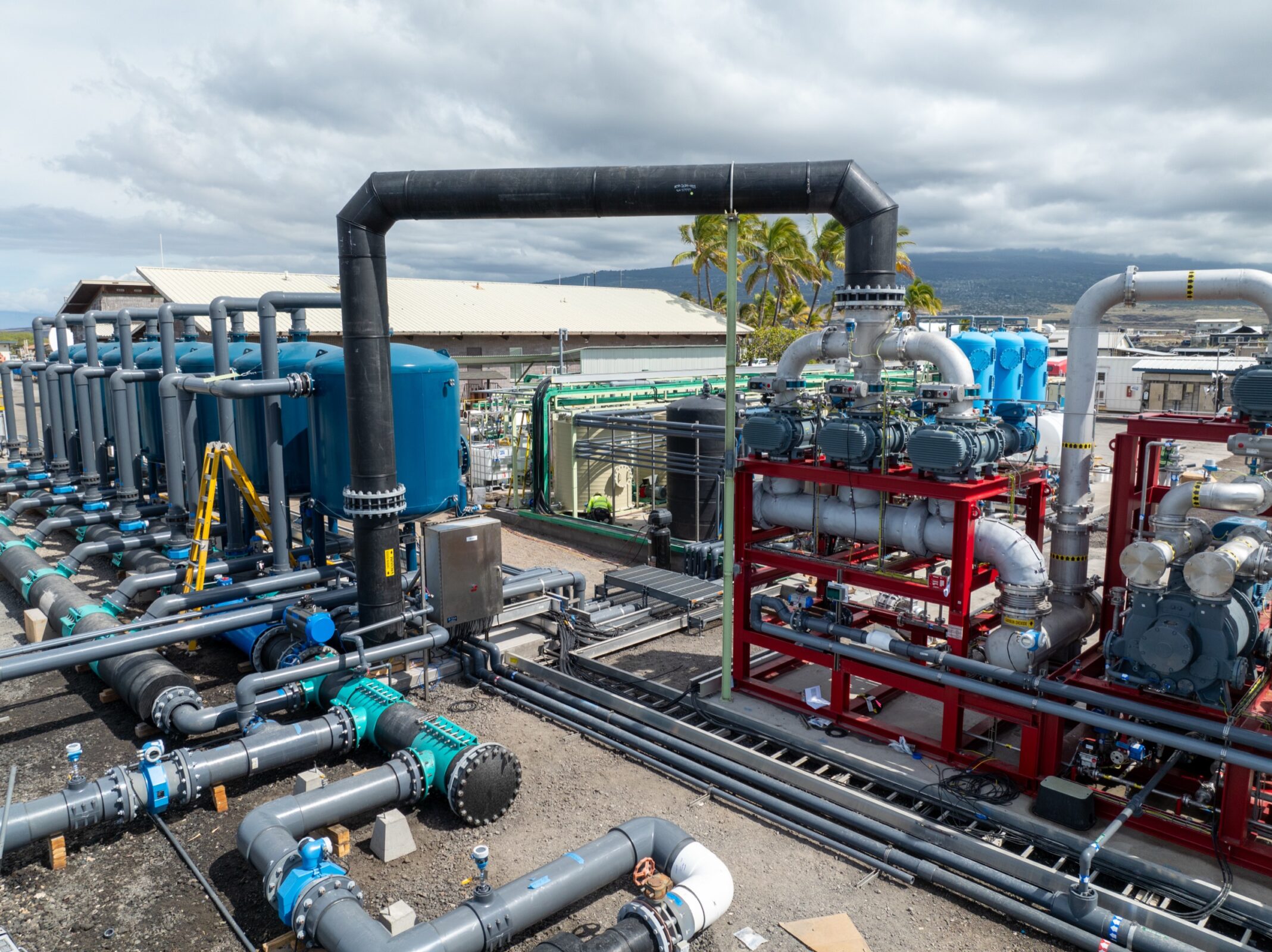
Our membrane and stack technology can perform a wide range of electrochemical processes.
Applications






Acid & base generation
We convert suitable salt-rich waste streams into two valuable products, acid and base, for use onsite. Generating both reagents where you need them cuts chemical purchases, bulk transport costs, and operating expenses, while limiting your exposure to supply disruptions and price swings. Production at working concentrations also reduces the need to dilute and handle concentrated chemicals, which makes onsite operation safer. By turning waste into usable reagents, we help you lower disposal costs and support continuous operation through a more sustainable, circular process.
Key benefits of onsite acid & base generation:
- Lower reagent costs, with no purchased acid and caustic or delivery coordination to manage
- Less spent chemistry to dispose of, since waste streams are reused
- Controlled pH swings to support capture and release cycles, sorbent regeneration, and other process needs
Markets that benefit from reagent generation
Conversion
Captura’s bipolar membrane stacks use electricity to convert dissolved salts into valuable products, including lithium salts into lithium hydroxide, while generating acid you can reuse in your process. This direct conversion approach can simplify processing, reduce chemical consumption, and limit the waste created by conventional chemical conversion.
Key benefits of conversion:
- Fewer purchased conversion chemicals and lower associated costs
- Fewer intermediate processing steps and less byproduct waste
- No need to transport salt solutions for offsite conversion
Markets that benefit from conversion

Concentration
Captura’s electrodialysis technology uses electricity and selective membranes to transfer dissolved salts from one stream into another, producing a concentrated salt solution and a salt-depleted stream. This process can recover valuable salts, prepare solutions for downstream processing, and reduce the volume of brine requiring further treatment or disposal. Our membranes and stacks are designed to support efficient ion transport in compact, scalable systems.
Key benefits of concentration
- Recovery of valuable salts for reuse or further processing
- Reduced brine volume requiring treatment or disposal
- Compact, scalable systems for onsite integration
Markets that benefit from Captura concentration
Long-duration energy storage
Captura’s bipolar membrane electrodialysis technology offers a flexible and rapidly expandable approach to long-duration energy storage. During charging, our bipolar membrane stack uses electricity to convert an inexpensive salt solution into acid and base solutions, which are safely stored in tanks with virtually no self-discharge. During discharge, the acid and base flow back through the stack to generate electricity. Stack size determines power output, and tank volume determines storage duration. To store energy for longer, operators simply add tank capacity without purchasing additional stacks. The system uses no lithium or other critical minerals, and its non-flammable, aqueous chemistry can be deployed wherever grid-scale storage is needed.
Key benefits of Captura’s storage solution:
- Abundant, low-cost storage media: salt and water
- Independent sizing of power (stacks) and energy capacity (tanks) for cost-effective multiday storage
- High-performance membranes designed to minimize energy losses
- Negligible self-discharge over long hold times
- Non-flammable aqueous chemistry with no thermal runaway risk and minimal thermal management
- Electrode-less architecture with no reliance on critical minerals
- Abundant materials and simple chemistry support deployment across a broad range of geographies and use cases
Markets that benefit from Captura technology

Further applications
Captura membranes and stacks support opportunities for use cases across emerging technologies and new process designs. If you’re interested in how our technologies might be applied to your processes, we can evaluate your current stream and work with you to create optimal solutions.

Common Questions
Can one stack system perform more than one process?
The configuration of membranes in your stack determines which processes it can perform, and a single stack can often perform more than one. In lithium processing, for example, one stack can convert lithium chloride into lithium hydroxide while generating the hydrochloric acid used to regenerate your extraction media. Depending on your stream, we may also be able to combine concentration and conversion in the same stack.
How do I know this will save money?
We analyze your feed chemistry and test our technology within your specified operating parameters to determine whether your process can benefit from our technology at scale.
Expert to expert
Ready to evaluate Captura for your process?
Our technical experts are here to help you develop and scale new technology for your process.