Membrane products
High-performance ion exchange membranes
Bipolar, cation, and anion exchange membranes for separation, conversion, and on-site reagent generation, built for higher performance and lower energy use than commercial alternatives.
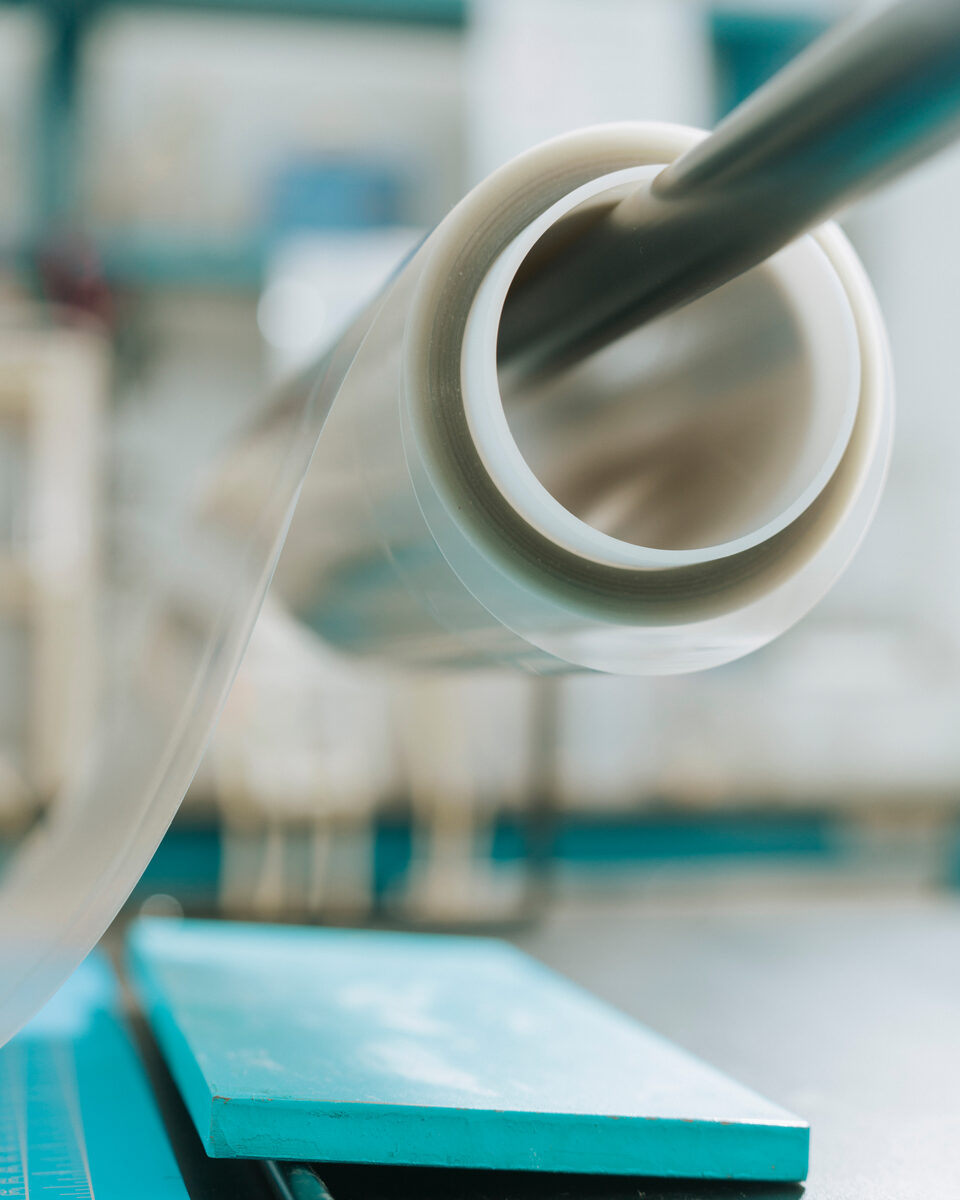

Membrane portfolio
Our bipolar, cation-exchange, and anion-exchange membranes support a range of separation and electrochemical applications, with distinct properties to meet different process needs.
BPM
Bipolar membrane (BPM)
Use cases
- Acid & base generation
- Conversion
- Electrolysis
Key characteristics
- Thickness range: 60-80 µm
- Non-reinforced (Reinforced available soon)
- Low voltage
- Ships in rolls or sheets
- Wet or dry
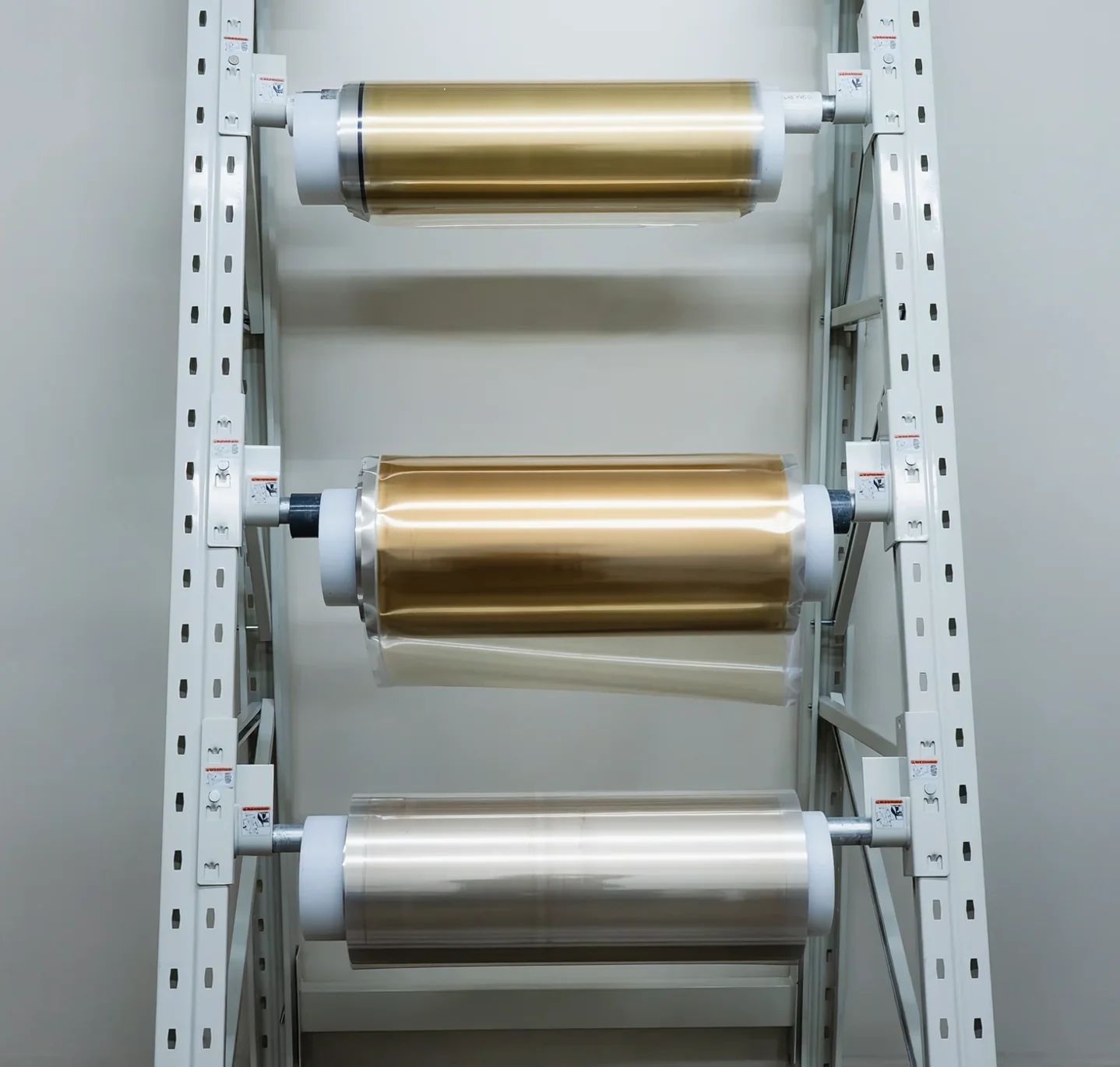
CEM
Cation exchange membrane (CEM)
Use cases
- Acid & base generation
- Conversion
- Concentration
Key characteristics
- Thickness range: 40-60 µm
- Non-reinforced (Reinforced available soon)
- Low resistance
- High blocking
AEM
Available soon
Anion exchange membrane (AEM)
Use cases
- Acid & base generation
- Conversion
- Concentration
Key characteristics
- To be published on release
Key features
Cast roll-to-roll in the US
- In-house polymer
- US roll-to-roll casting
- Vertically integrated production
- No tariff exposure
- PFAS-free
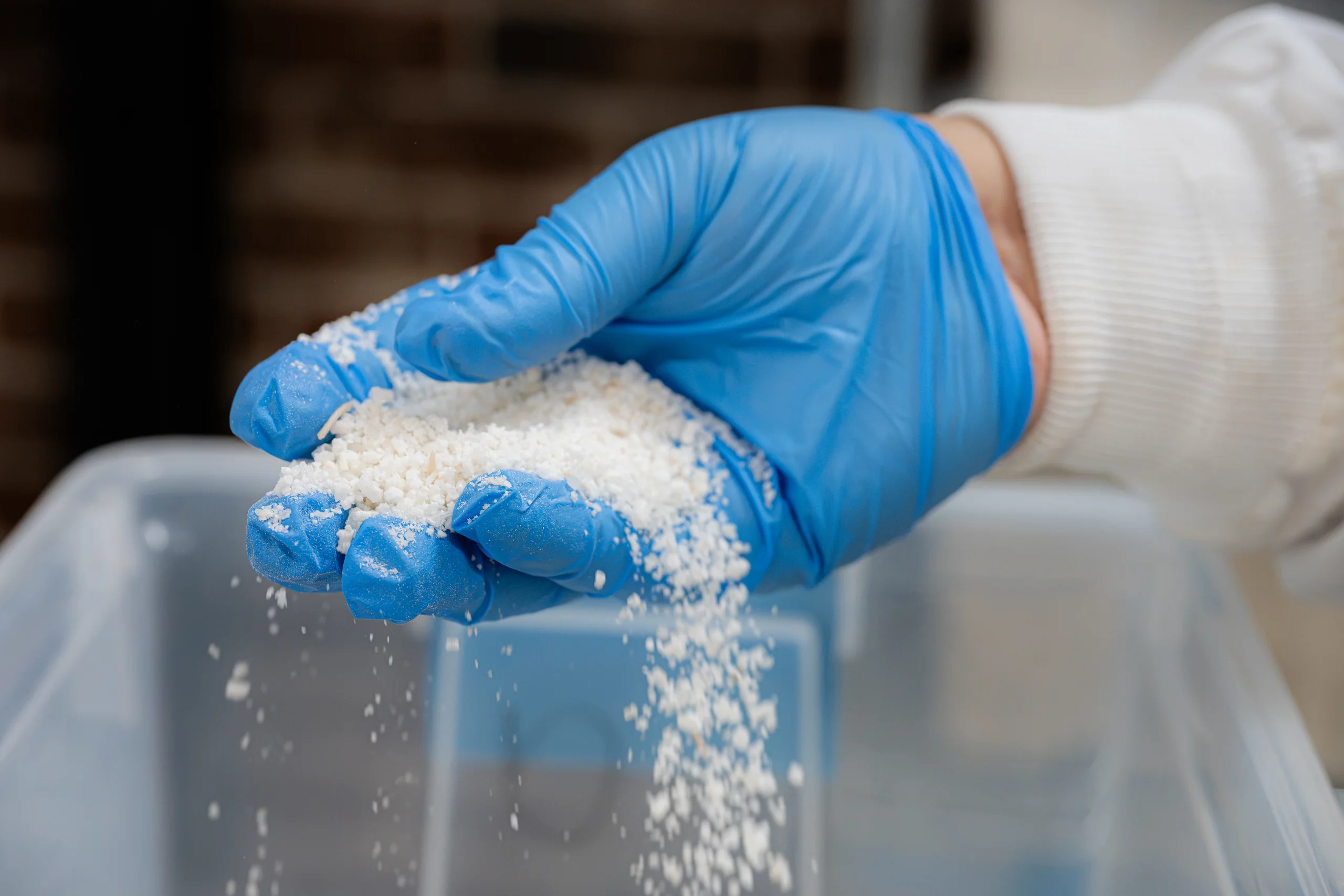
How we supply membranes
Membranes ship as rolls from our US casting line in widths configured to your stack. Precut sheet formats are available for stacks that need them and production-volume supply is available under a supply agreement.
- Format
- Rolls or sheets, dry or pre-soaked
- Roll width
- Up to 55 cm (BPM and CEM)
- Cut formats
- Custom-sized sheets
- Annual capacity
- 120,000+ m²
- Long-term supply agreements
- Available Talk to a Captura expert
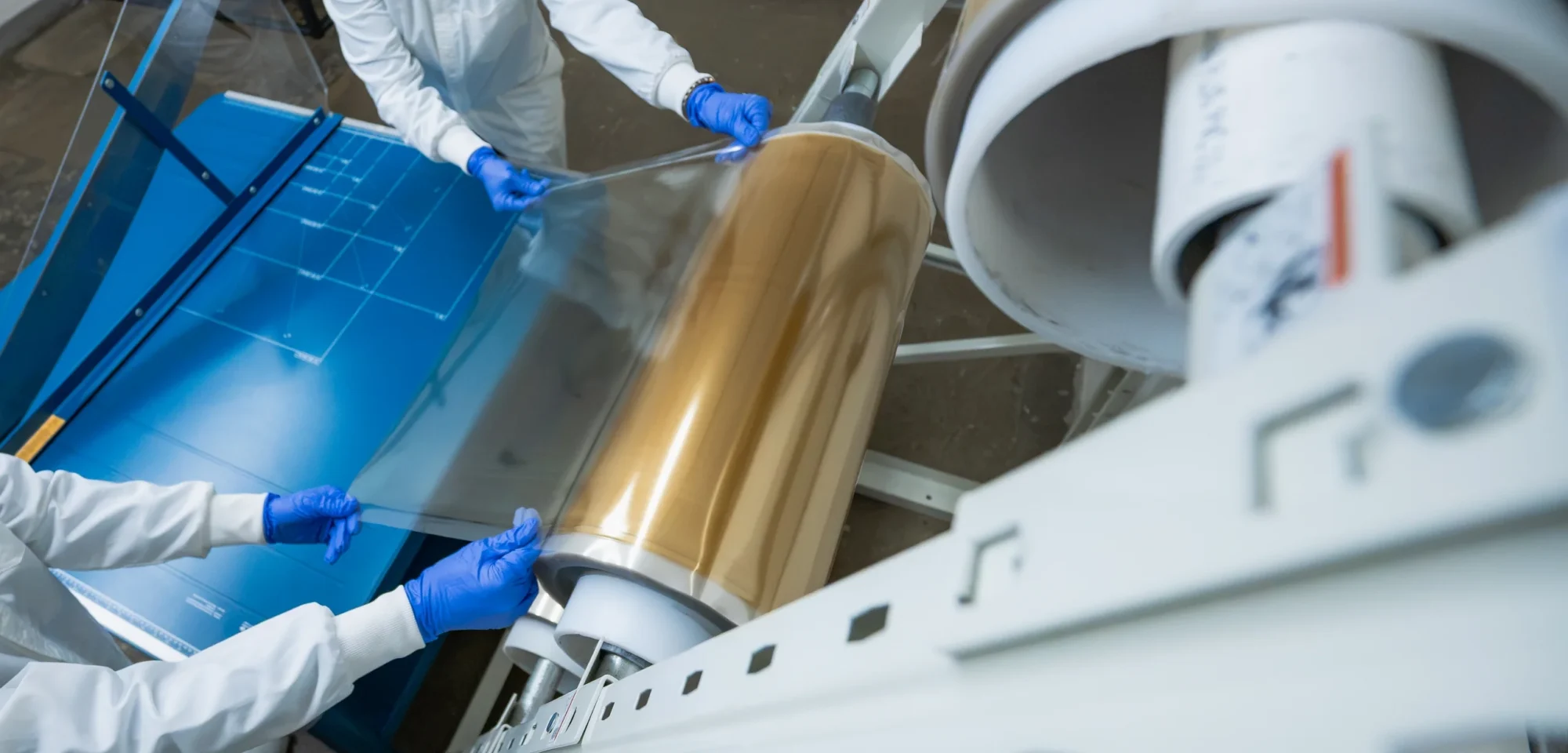
How our membranes compare
Our US-made membranes are engineered for sustained performance and high efficiency, helping reduce energy use, replacement needs, and lifetime costs.
| Captura membranes | Conventional | |
|---|---|---|
| Durability under load | Engineered for sustained duty | Degrades faster under the same conditions |
| Current efficiency | Higher | Baseline |
| Vertically integrated? | Yes. We produce everything in house from polymer to membranes to stacks. | Not typically |
| Origin | US-made | Typically imported |
| Cost over service life | Lower lifetime cost. Lower membrane cost, fewer membranes needed for the same output, and less energy required per unit of product. | Higher cost, driven by cost of the membranes themselves, along with replacement frequency and performance. |

Not seeing what you need?
We can tailor membrane solutions to your application
We work with customers to evaluate new applications and identify the best fit within Captura’s existing membrane portfolio. When application needs extend beyond our current offerings, our vertically integrated development and manufacturing capabilities enable us to adapt existing chemistries—or selectively develop new ones—from initial evaluation through validation and scale-up to production.
Versatile membrane technology
Our advanced membrane technology has proven applications for a wide range of industries and use cases.

Lithium & Critical Minerals
Learn more

Water Treatment & Desalination
Learn more

Chemicals & Industrial
Learn more

Carbon & Emerging Tech
Learn more

Long-Duration Energy Storage
Learn moreCommon Questions
What are bipolar membranes?
A bipolar membrane consists of a cation exchange layer and an anion exchange layer, with a catalyst at the junction between them. Under an applied electric field, that junction splits water into hydrogen and hydroxide ions. In combination with additional ion exchange membranes in a stack, the BPM allows for generation of acid and base directly from a salt solution. It’s the core building block of bipolar membrane electrodialysis (BMED).
What are cation membranes?
A cation exchange membrane allows positively charged ions to pass through while blocking negatively charged ones. In a bipolar membrane electrodialysis (BMED) stack, cation and anion exchange membranes are used to split salt and separate acid and base products. They’re also sold on their own for other electrochemical processes, like electrolysis, that call for selective cation transport rather than water splitting.
What are anion membranes?
An anion exchange membrane allows negatively charged ions to pass through while blocking positively charged ones. In a bipolar membrane electrodialysis (BMED) stack, anion exchange membranes carry the negative ions from your salt, such as chloride, toward the acid stream, while cation exchange membranes carry the positive ions toward the base stream. Together they keep the acid and base products separate. Anion exchange membranes are a critical part of our stacks, and our own is in development and will be available soon.
Do you sell rolls, or only cut sheets?
Rolls are the standard format, available in up to 55 cm widths for BPM and CEM. Precut sheet formats are also available. Tell us your sizing needs and we’ll work with you to find the format that works.
Can you supply at commercial volume?
Captura’s production facility supports 120,000+ m² of membrane annually, with secured manufacturing partnerships that can scale to millions of m² per year. Supply agreements at commercial volume are available.
What feed chemistries have you run?
Captura’s electrodialysis technologies support a range of feed chemistries including chloride-, sulfate-, and carbonate-based chemistries. These chemistries can come from a range of sources, including lithium and critical mineral processing, industrial operations, seawater and desalination brines, produced water, geothermal resources, and carbon capture systems.
Our technical team can evaluate your feed composition and process objectives to assess suitability and recommend testing for your application.
How are membranes shipped and stored?
Membranes can be shipped as rolls or sheets (dry or pre-soaked). Handling and storage conditions are in the data sheet for each type.
Expert to expert
Evaluating membranes for your process?
Our technical experts are here to help you pick the right membrane for your process.